
Urban road safety is becoming one of the highest priorities for transportation authorities worldwide. As cities continue to promote walkability, sustainable mobility, and Vision Zero initiatives, engineers are increasingly turning to raised pedestrian crosswalks as an effective traffic calming solution.
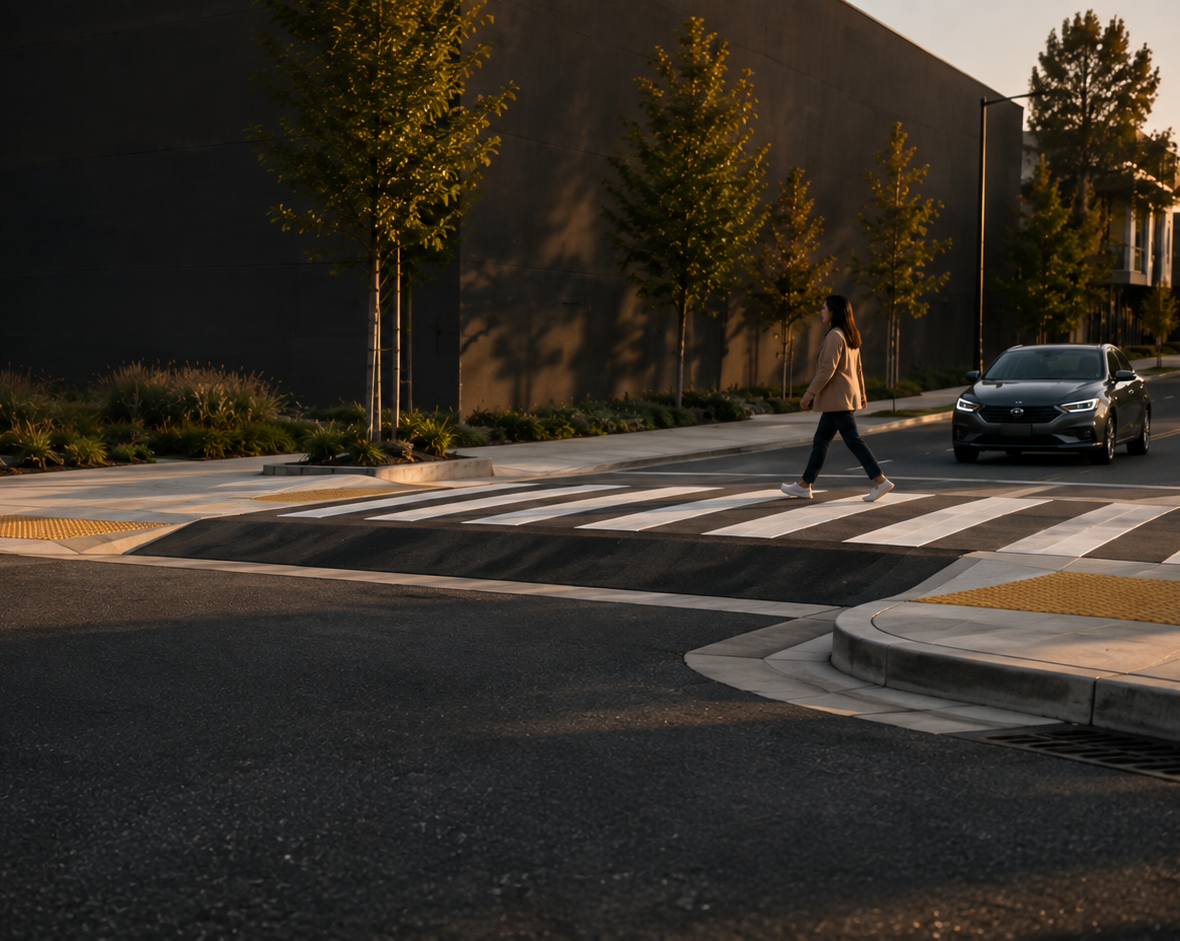
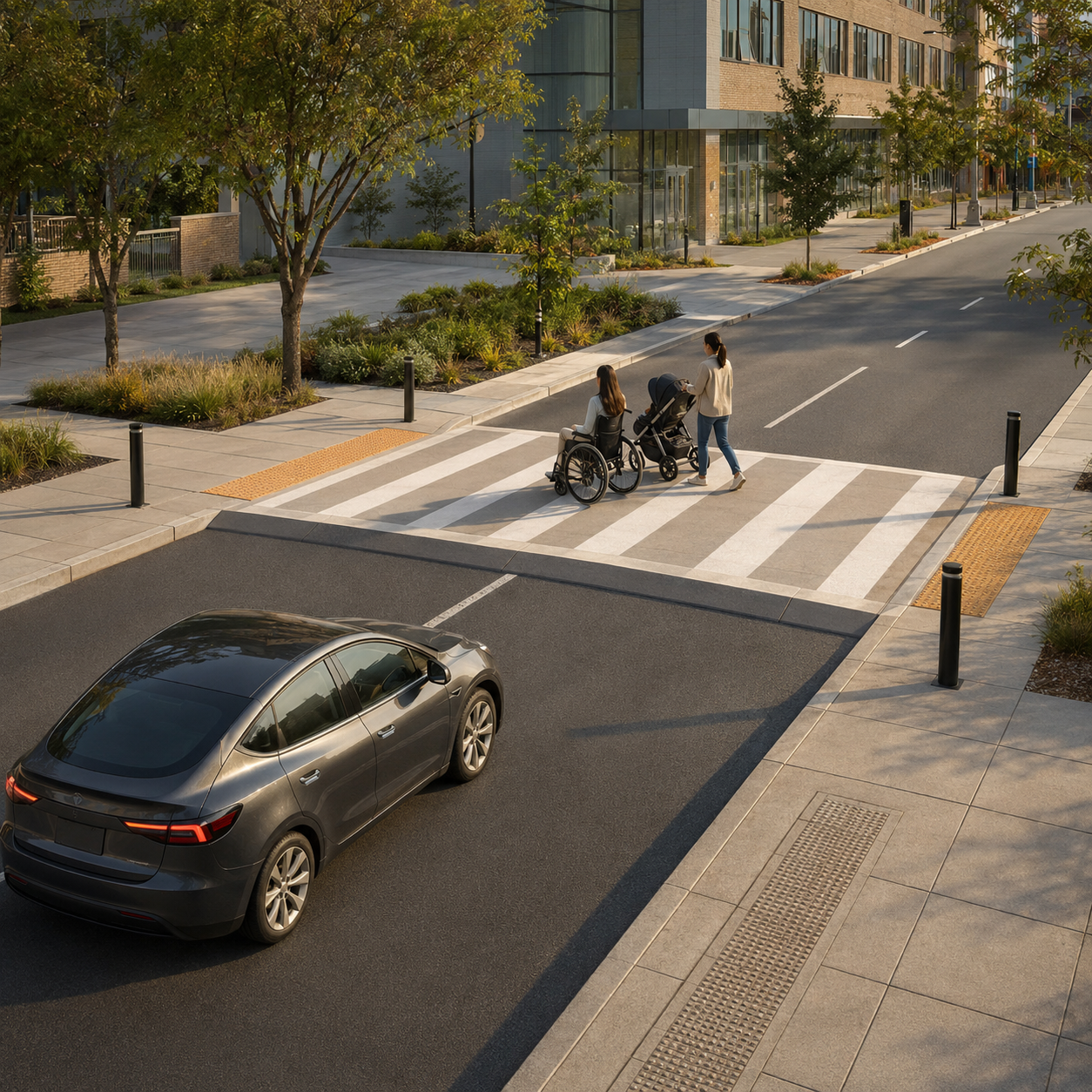
Unlike conventional painted pedestrian crossings, raised crosswalks physically elevate the crossing area to sidewalk level. This design naturally encourages drivers to reduce speed while improving pedestrian visibility and accessibility.
Recent international implementations once again demonstrate that infrastructure-based traffic calming measures can significantly improve safety for both pedestrians and drivers.
What Is a Raised Pedestrian Crosswalk?
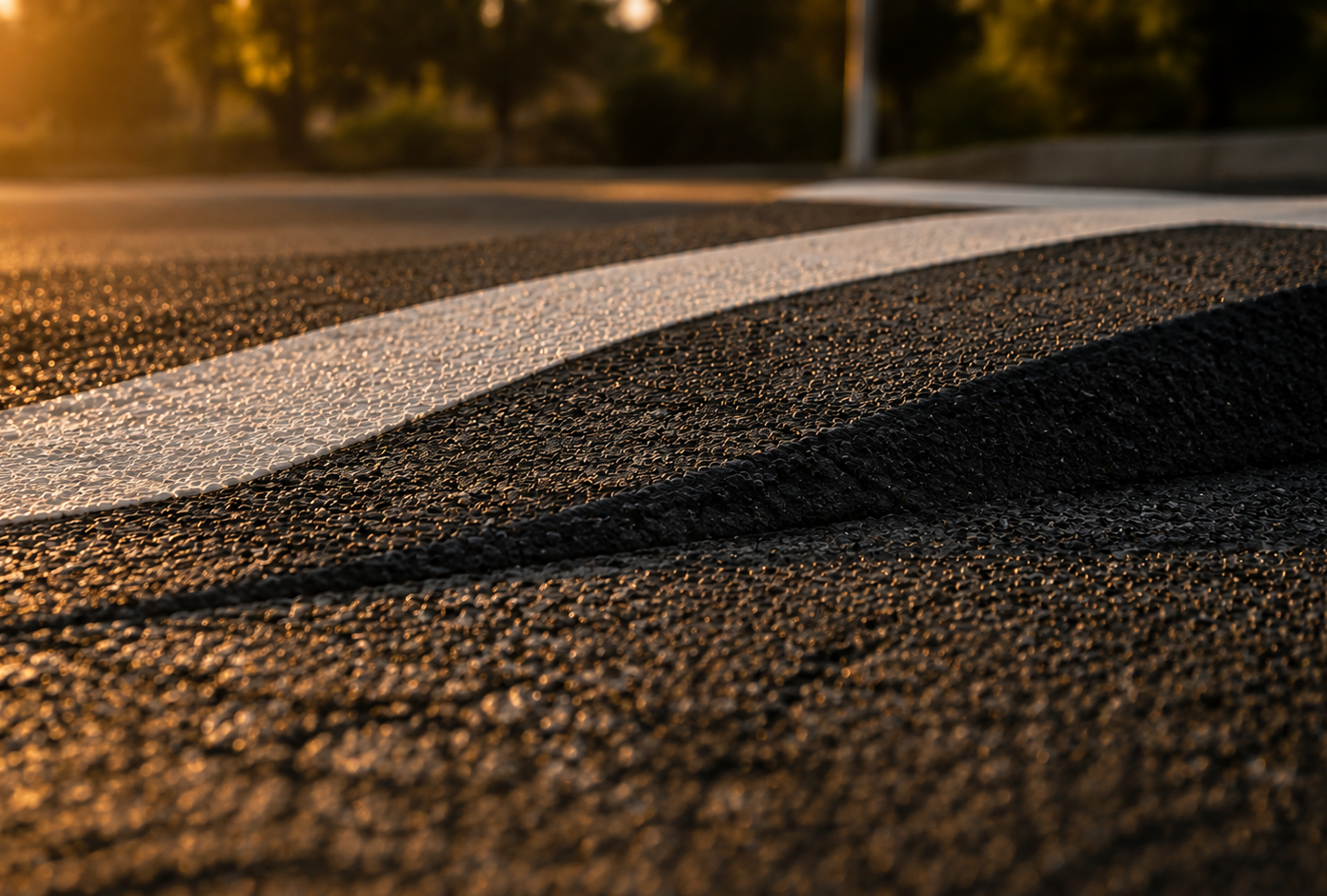
A raised pedestrian crosswalk is a pedestrian crossing constructed on an elevated platform rather than at normal roadway level.
The elevation functions as a speed table, forcing approaching vehicles to slow down without relying solely on traffic signs or enforcement.
Typical applications include:
- School zones
- Hospital entrances
- Residential streets
- Commercial districts
- City centers
- University campuses
Benefits of Raised Crosswalks | Improved Pedestrian Safety
Lower vehicle speeds dramatically reduce both the likelihood and severity of pedestrian collisions.
Research consistently shows that impact speed is one of the most critical factors influencing pedestrian survival rates.
Better Driver Awareness
Raised crossings improve visibility by placing pedestrians at a higher eye level.
Drivers recognize the crossing earlier, increasing reaction time.
Natural Speed Reduction
Instead of relying entirely on speed cameras or enforcement, raised crossings provide passive speed control.
This makes them particularly effective in areas where speed compliance is inconsistent.
Enhanced Accessibility
Because the crossing aligns with sidewalk height, pedestrians experience easier movement, including:
- Wheelchair users
- Parents with strollers
- Elderly pedestrians
- Cyclists
The Importance of High-Performance Road Markings
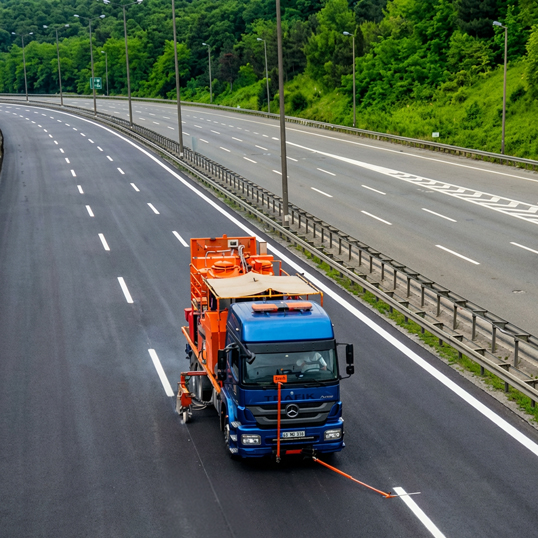
The effectiveness of a raised pedestrian crossing depends not only on its physical structure but also on the visibility of its pavement markings.
Professional road marking systems should provide:
- Excellent daytime visibility
- High nighttime retroreflectivity
- Long-term durability
- UV resistance
- Strong skid resistance
- Fast curing time
- Weather resistance
Thermoplastic road marking systems remain one of the most preferred solutions due to their durability and excellent long-term performance.
Why Glass Beads Matter
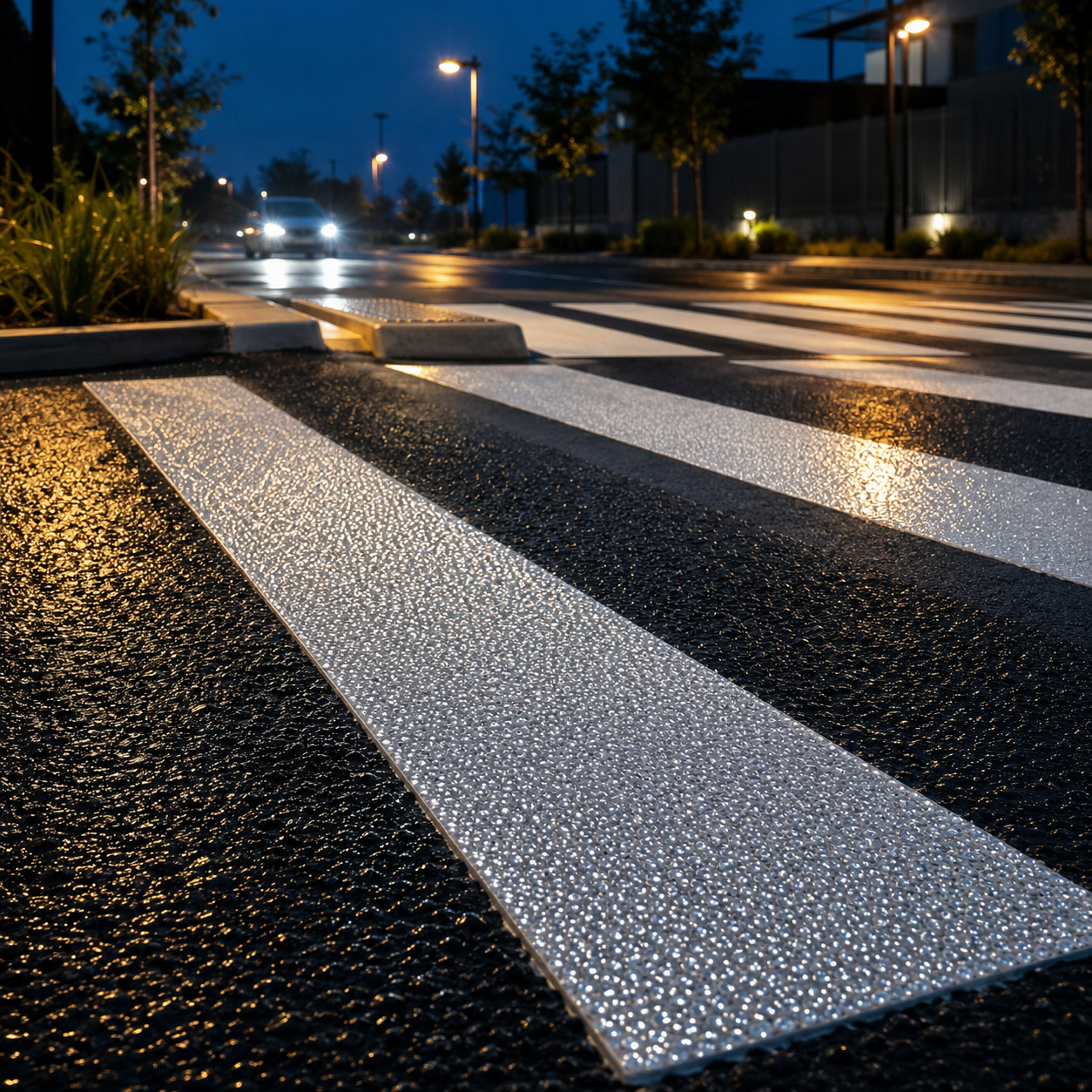
Retroreflective glass beads play a critical role in making pedestrian crossings visible at night.
When illuminated by vehicle headlights, quality glass beads return light directly toward the driver, improving recognition distance and reaction time.
Proper bead selection and application significantly influence:
- Night visibility
- Wet-night performance
- Driver confidence
- Overall road safety
Engineering Considerations
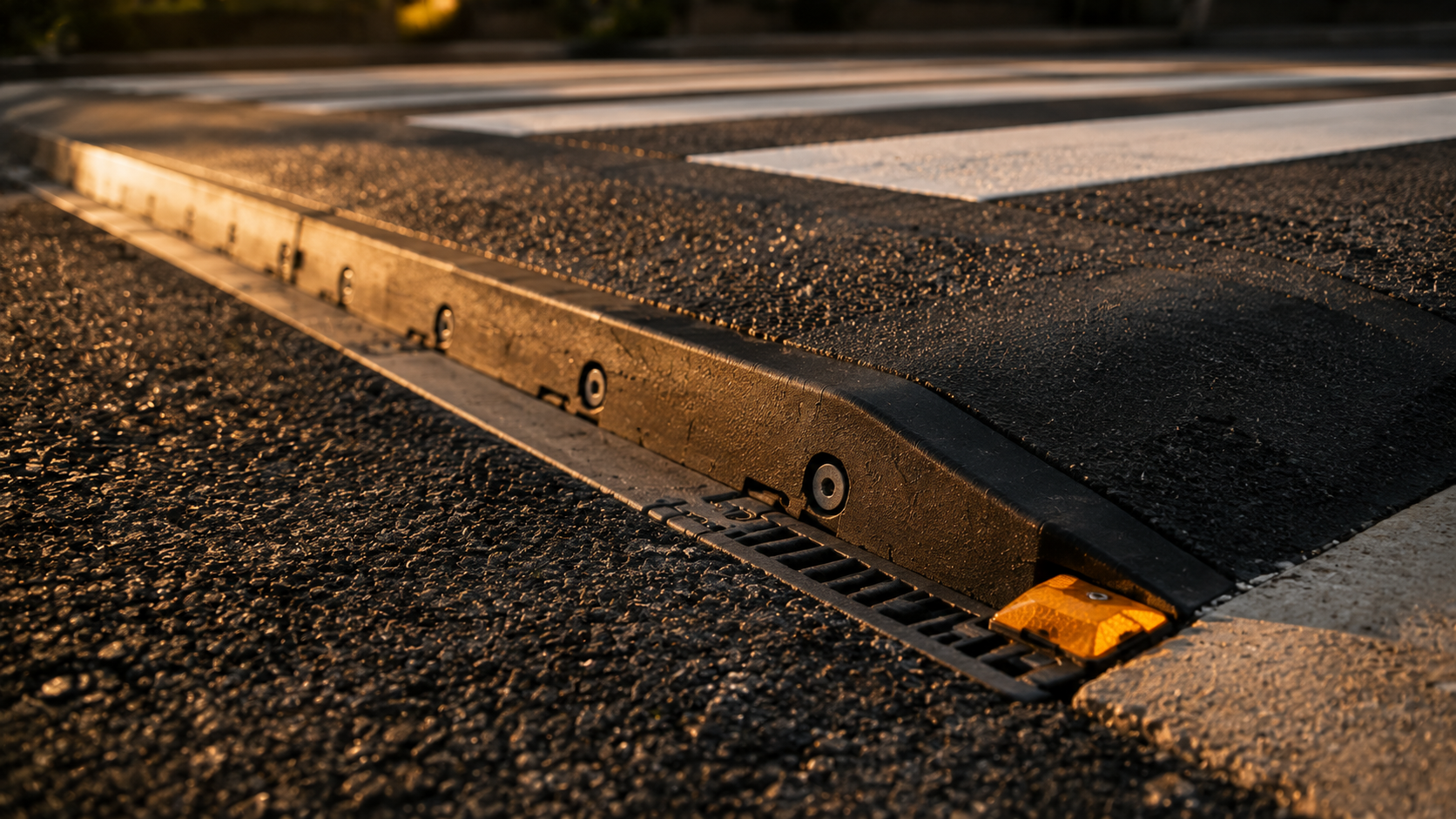
Successful raised pedestrian crossings require proper engineering, including:
- Appropriate platform height
- Smooth approach ramps
- Effective drainage
- High-friction surface
- Durable pavement markings
- Compliance with national road standards
A well-designed crossing combines civil engineering with high-quality road marking materials.
Supporting Safer Roads Through Integrated Solutions
Improving pedestrian safety requires more than installing physical infrastructure.
Long-lasting road marking paints, reflective glass beads, and professionally designed application systems all contribute to creating safer transportation environments.
As an integrated manufacturer serving the road marking industry, Stil GROUP supports road authorities and contractors with solutions covering road marking materials, reflective technologies, and application expertise for modern traffic safety projects.
Conclusion
Raised pedestrian crosswalks represent one of today’s most effective traffic calming measures.
When combined with durable thermoplastic road markings, premium reflective glass beads, and professional application techniques, they provide a long-lasting solution for improving pedestrian safety while maintaining efficient traffic flow.
As cities continue investing in safer infrastructure, integrated road marking solutions will remain a key component of sustainable urban mobility.
FAQ
What is a raised pedestrian crosswalk?
A raised pedestrian crosswalk is an elevated pedestrian crossing designed to reduce vehicle speeds while improving pedestrian visibility.
Do raised crosswalks reduce accidents?
Yes. Lower vehicle speeds generally reduce both the frequency and severity of pedestrian crashes.
Which road marking material is best for raised crosswalks?
Thermoplastic road marking materials are widely preferred due to their durability, visibility, and long service life.
Why are glass beads used in pedestrian crossings?
Glass beads improve nighttime retroreflectivity, allowing drivers to recognize pedestrian crossings from greater distances.