
Road Marking Solutions
Importance and Applications
Parking and logistics markings are vital for maintaining order, efficiency, and safety in various environments such as parking lots, warehouses, and logistics hubs. These markings serve a wide range of purposes—from designating parking spaces (including accessible and electric vehicle spots) to guiding vehicle and pedestrian traffic with directional arrows, pedestrian crossings, and fire lane indicators.
In warehouse settings, aisle markings and loading zone lines help streamline the movement of goods and reduce the risk of collisions involving forklifts or trucks.
Parking and Logistics Markings: Efficiency and Workplace Safety
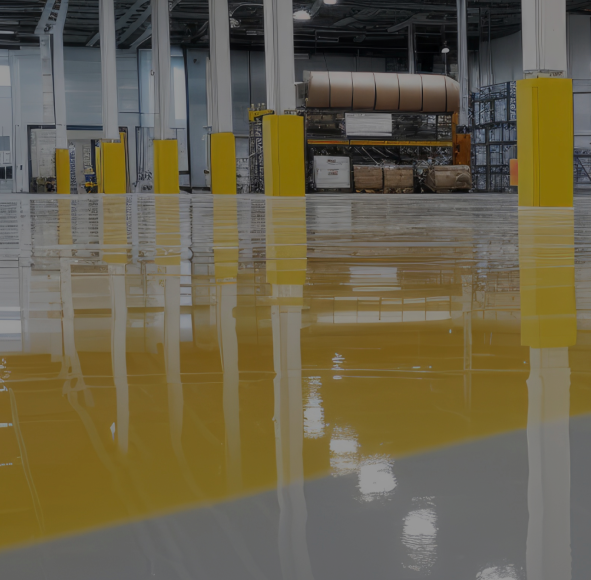
Parking and logistics floor markings are far more than just simple lines; they are the backbone of operational speed, OHS (Occupational Health and Safety) standards, and spatial efficiency. While poorly planned layouts lead to chaos and accidents, precise markings maximize facility capacity and safety.
Warehouse & Logistics Zones: Sharply segregates heavy forklift traffic from pedestrian walkways, ensuring flawless operational management with zero errors in loading zones.
Parking Areas: Increases vehicle capacity by 15% to 20% through smart line planning, optimizing driver comfort with directional arrows, disabled, and EV (electric vehicle) symbols.
The Power of Stil Group & Stil Trafik® Expertise
Subject to constant heavy-duty traffic and chemicals, standard coatings wear out rapidly. Utilizing our high-durability in-house StilAcryl® MMA Resin technology, alongside industry-leading Graco marking equipment—for which we are the authorized distributor—our professional application brand Stil Trafik® delivers flawless, long-lasting, and millimetric on-site solutions.
Operational Benefits &
Safety Compliance
The benefits of well-executed parking and logistics markings extend beyond visual clarity—they contribute to safer environments, improved traffic flow, and regulatory compliance. Clear, durable markings help prevent confusion and minimize the risk of accidents, especially in busy industrial zones where vehicles and people interact frequently.
Moreover, proper marking ensures that areas comply with legal requirements, such as reserved or accessible parking regulations, supporting efficient operations and safety protocols.